MarTech Tools 2026: Complete Beginner-Friendly Guide
MarTech tools in 2026 are software platforms that help businesses automate marketing, manage customer data, personalize campaigns, and track performance using technology. These tools combine marketing strategy with automation, analytics, and AI to improve conversions and revenue. Beginners can start learning MarTech through CRM tools, email automation, and marketing analytics platforms.
What Are MarTech Tools in Digital Marketing? Complete Guide 2026
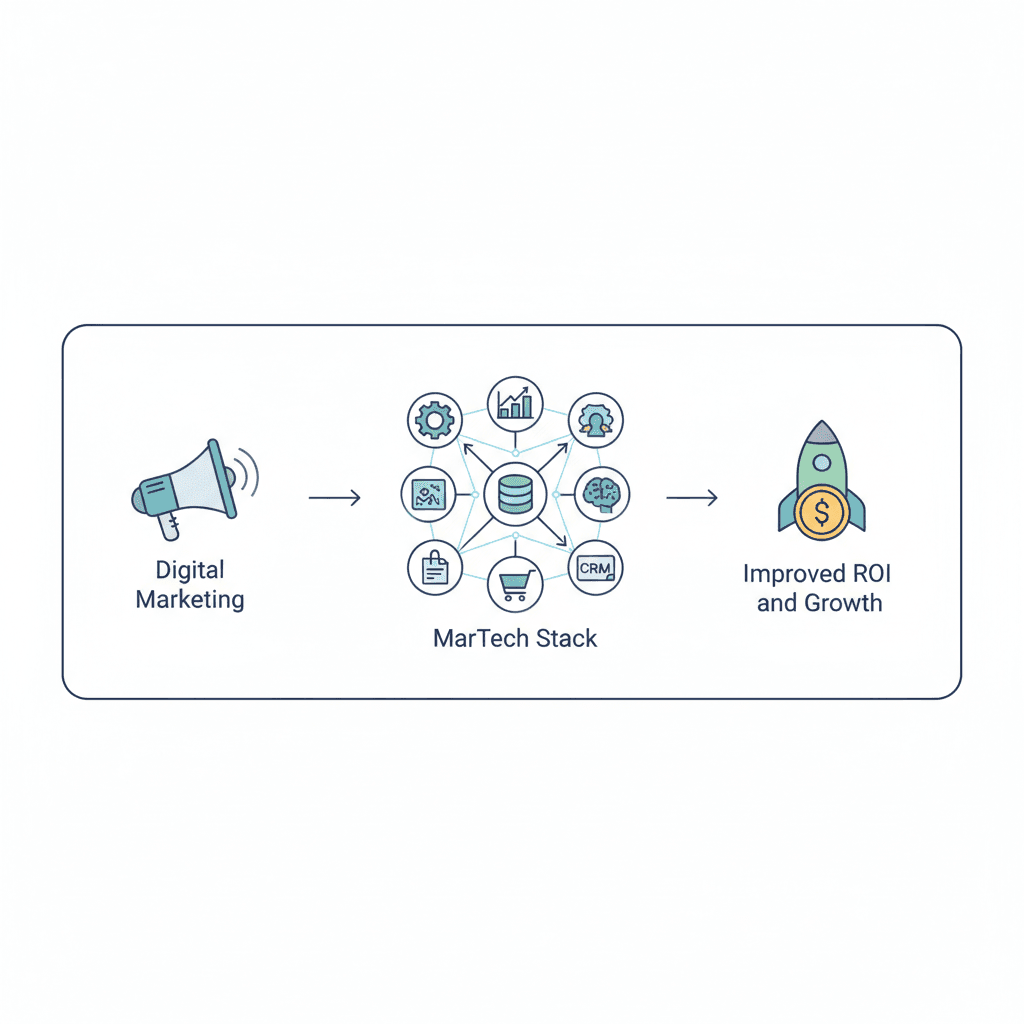
MarTech stands for Marketing Technology.
MarTech tools are digital platforms used to plan, execute, automate, and measure marketing campaigns. They reduce manual work and help businesses make data-driven decisions.
If you are searching for things like:
- the best MarTech tools for beginners in 2026 that are easy to learn and affordable,
- marketing automation tools that can help small businesses grow faster,
- a clear comparison between CRM software and email marketing platforms,
- or AI-powered marketing tools that boost e-commerce sales,
then you are already stepping into the world of modern MarTech solutions.
Why MarTech Tools Are Important in 2026
In 2026, MarTech tools are essential because they automate complex marketing processes, improve data accuracy, and enable personalized customer experiences at scale. With AI-powered automation and real-time behavior tracking, businesses can reduce manual workload, optimize marketing spend, and improve customer lifetime value more efficiently.
MarTech tools help companies in practical, measurable ways:
- They automatically send targeted email and SMS campaigns at the right time, without manual effort.
- They monitor how users interact with websites or apps in real time.
- They group customers into meaningful segments based on behavior and interests.
- They adjust and optimize ad performance using live campaign data.
- They help increase customer lifetime value through smarter personalization.
Without marketing technology platforms, scaling digital campaigns often becomes expensive, time-consuming, and harder to control.
Types of MarTech Tools: Complete List with Examples (2026 Guide)
If you are new to marketing technology, the easiest way to understand it is by looking at its core categories. In 2026, most MarTech tools fall into five major groups: CRM systems, marketing automation software, analytics platforms, e-commerce marketing tools, and AI-driven personalization platforms. Together, these tools help businesses manage customer data, automate repetitive tasks, and measure campaign performance without confusion.
Let’s break them down in simple terms.
1. CRM Platforms (Customer Relationship Management)
A CRM platform works like a central command center for your customer data. Instead of scattered spreadsheets and missed follow-ups, everything — leads, conversations, purchase history, and sales stages — stays organized in one dashboard.
This helps businesses respond faster, track opportunities properly, and ensure no potential customer is ignored.
Examples include HubSpot, Salesforce, and Zoho CRM.
2. Marketing Automation Software
Marketing automation tools handle repetitive communication tasks automatically. Instead of manually sending follow-up emails or reminders, these platforms trigger messages based on user actions.
For example, if someone signs up for a newsletter or abandons a cart, the system can instantly send a personalized message.
Popular tools in this category include Mailchimp, ActiveCampaign, and Zapier.
3. Analytics and Performance Tracking Tools
You cannot improve what you do not measure. Analytics tools show how visitors interact with your website, where traffic comes from, and which campaigns generate results.
These platforms help marketers make data-driven decisions instead of guessing.
Common examples are Google Analytics, Mixpanel, and Hotjar.
4. E-commerce Marketing Platforms
Online stores require specialized tools to manage personalization, product recommendations, abandoned cart recovery, and repeat purchases.
E-commerce marketing platforms focus on increasing conversions and improving customer retention.
Well-known options include Klaviyo, Shopify, and Omnisend.
5. AI-Powered Marketing Tools (Growing Rapidly in 2026)
AI-driven marketing tools are becoming more common as businesses look for smarter automation. These platforms use predictive analytics and machine learning to optimize ad targeting, improve content recommendations, and forecast customer behavior.
Instead of manually adjusting campaigns, AI systems continuously learn and improve performance over time.
Examples include Jasper, Surfer SEO, and Albert.
Difference Between Digital Marketing and MarTech (2026 Complete Guide)
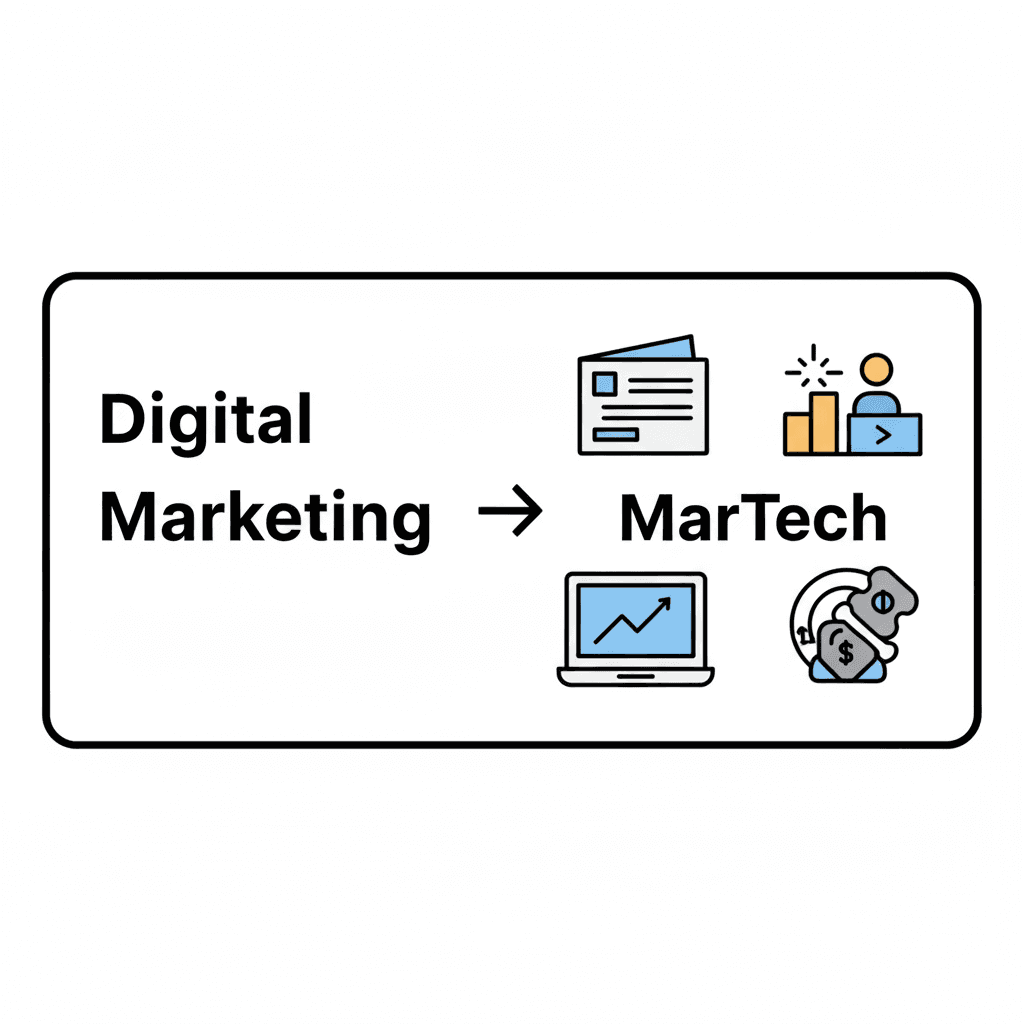
The main difference between Digital Marketing and MarTech is that digital marketing focuses on strategy and creative promotion, while MarTech focuses on the technology and software used to automate and measure those promotions. In 2026, digital marketing is the ‘What’ (the campaign), and MarTech is the ‘How’ (the system that runs it).
Many beginners think Digital Marketing and MarTech are the same thing. They are closely connected, but they are not identical.
Digital marketing focuses on how you promote a product or service online.
MarTech focuses on the technology that makes that promotion scalable, measurable, and automated.
In simple terms, digital marketing is the strategy and creativity.
MarTech is the system and infrastructure behind it.
Let’s understand this clearly.
1. Core Focus
Digital marketing is about running campaigns — creating ads, writing content, optimizing SEO, managing social media, and generating leads.
MarTech is about building and managing the systems that power those campaigns — CRM platforms, automation workflows, analytics dashboards, and AI-driven personalization tools. If digital marketing is the engine, MarTech is the control system that keeps it running efficiently.
2. Skill Set Required
A digital marketer needs skills like:
- Content creation
- Copywriting
- Social media management
- Search engine optimization
- Paid advertising strategy
A MarTech professional needs skills like:
- CRM configuration
- Marketing automation setup
- Data analytics interpretation
- Customer segmentation
- Integration between platforms
One side is creative and strategic.
The other side is technical and data-driven.
3. Tools vs Execution
Digital marketing uses platforms like search engines, social networks, and advertising systems to reach audiences.
MarTech manages tools such as CRM software, email automation systems, analytics platforms, and AI marketing solutions to support that execution.
For example:
A digital marketer may create an email campaign.
A MarTech specialist ensures the automation workflow triggers correctly, segments users properly, and tracks conversion data accurately.
4. Measurement and Optimization
Digital marketing tracks results such as clicks, impressions, and conversions.
MarTech goes deeper. It connects multiple systems, tracks user journeys across channels, and provides unified data insights. This is why companies in 2026 invest heavily in marketing technology infrastructure — because scaling campaigns without proper systems becomes inefficient.
5. Career Path Difference
Digital marketing roles often include:
- SEO Specialist
- Social Media Manager
- Performance Marketer
- Content Strategist
MarTech roles usually include:
- Marketing Automation Specialist
- CRM Manager
- Growth Operations Executive
- Marketing Data Analyst
Both careers are growing, but MarTech professionals are in high demand because businesses rely more on automation and data.
Excel MIS & Dashboards – Best Practical Guide Read Full Details Here
Best MarTech Tools in 2026 for Marketing Automation & Growth
The best MarTech tools in 2026 include CRM platforms, marketing automation software, analytics systems, e-commerce personalization tools, and AI-powered optimization platforms. Businesses use these tools to automate campaigns, manage customer data, track performance, and improve marketing ROI efficiently.
Below is a carefully selected, beginner-to-advanced friendly list of widely used marketing technology platforms in 2026.
1. HubSpot – All-in-One CRM & Automation Platform
HubSpot remains one of the most popular MarTech tools for small and mid-sized businesses. It combines CRM, email marketing, landing pages, lead tracking, and automation workflows in one dashboard.
Best for: Startups, service businesses, inbound marketing teams
Key strength: Easy interface with strong automation features
Why it stands out in 2026: Scalable system for growing teams
2. Salesforce – Enterprise-Level CRM System
Salesforce is widely used by large organizations that need deep customization and advanced data management.
Best for: Enterprises, B2B sales teams
Key strength: Powerful reporting and integration capabilities
Why it stands out in 2026: Advanced ecosystem with strong automation add-ons
3. Klaviyo – E-Commerce Email & SMS Automation
Klaviyo is known for behavior-based email and SMS marketing, especially for online stores.
Best for: E-commerce brands
Key strength: Advanced customer segmentation and personalization
Why it stands out in 2026: Strong integration with online shopping platforms
4. Bloomreach – AI-Powered Personalization Platform
Bloomreach focuses on AI-driven search, recommendations, and content personalization.
Best for: Retail and large e-commerce brands
Key strength: Real-time product recommendations
Why it stands out in 2026: Data-driven customer journey optimization
5. Google Analytics – Performance & Traffic Tracking
No MarTech stack is complete without analytics. Google Analytics helps track website visitors, traffic sources, and campaign performance.
Best for: All website owners
Key strength: Detailed behavioral insights
Why it stands out in 2026: Improved event-based tracking system
6. Mailchimp – Beginner-Friendly Email Marketing Tool
Mailchimp is often recommended for small businesses starting with marketing automation.
Best for: Beginners and small teams
Key strength: Simple email campaign setup
Why it stands out in 2026: Easy automation for newsletters and promotions
7. Shopify – Integrated E-Commerce Marketing System
Shopify is more than just an online store builder. It includes built-in marketing tools for product promotions, customer retention, and reporting.
Best for: Online store owners
Key strength: All-in-one e-commerce ecosystem
Why it stands out in 2026: Built-in marketing + app integrations
8. Zapier – Workflow Automation Connector
Zapier connects different marketing tools together. It automates tasks between platforms without coding.
Best for: Teams using multiple software tools
Key strength: No-code automation
Why it stands out in 2026: Saves time by connecting entire tech stacks
How to Choose the Best MarTech Tool in 2026
Choosing the right marketing technology platform depends on:
- Business size
- Budget range
- Technical expertise
- Marketing goals
- Need for automation vs analytics
Small businesses often start with CRM + email automation. Larger companies build complete MarTech stacks including analytics, AI personalization, and workflow automation.
Best In-App Generative AI Tools for Digital Media (2026 Updated)
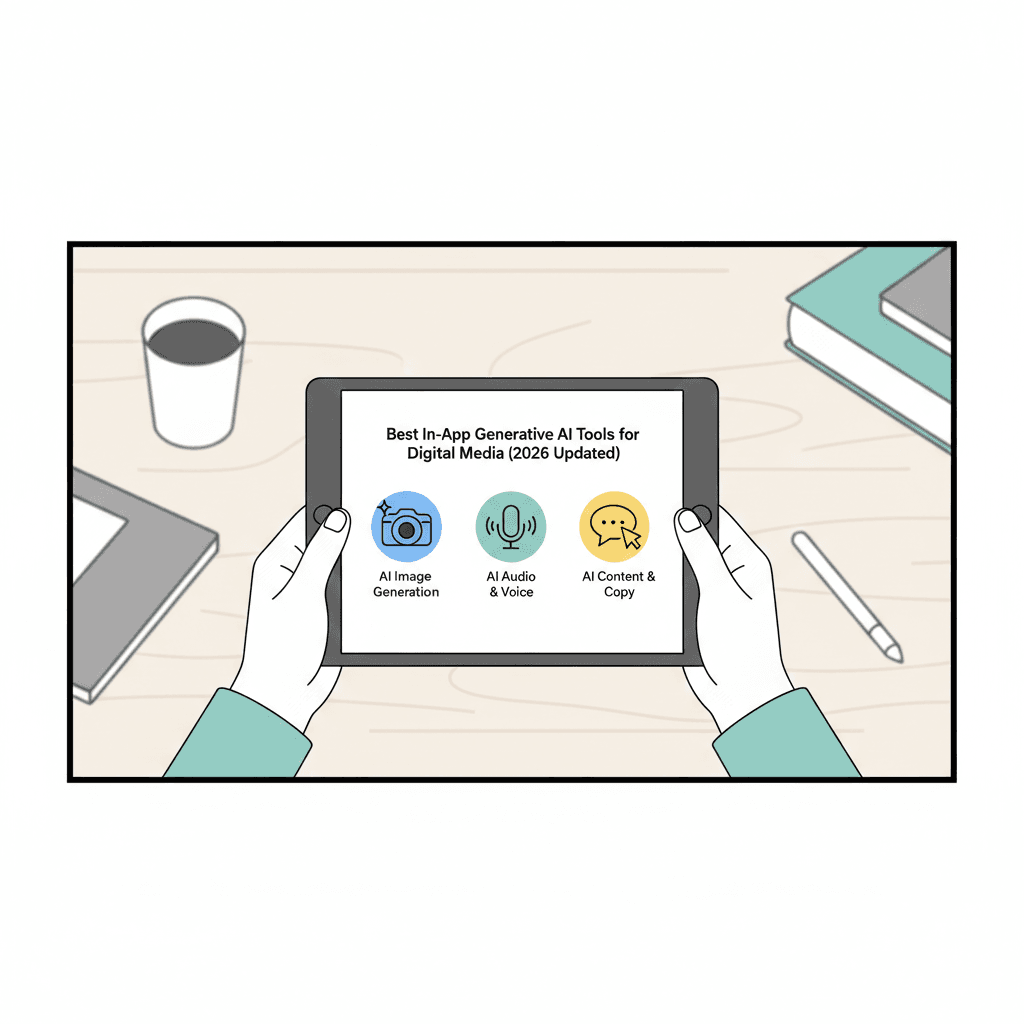
The best in-app generative AI tools for digital media in 2026 are software platforms that help creators generate images, video, audio, text, and design assets inside their apps using artificial intelligence.
These tools save time, enhance creativity, automate content creation, and improve engagement — especially for social media, e-commerce marketing, and brand storytelling.
Here’s a curated list of the top generative AI tools widely used in digital media today.
1. Canva – Integrated AI Design Assistant
Canva now includes powerful generative AI features that let you create images, social posts, and graphic elements inside the app with simple prompts.
Best for: Social media creators, small businesses, marketers
Key strength: AI-generated visuals and layouts with drag-and-drop ease
Why it stands out in 2026: Built-in text-to-image and design generation without leaving the editor
2. Adobe Firefly – AI Image & Media Generator
Adobe Firefly is designed for creators who want professional-grade generative outputs for images, vectors, and creative assets.
Best for: Designers, content studios
Key strength: High-quality image generation tailored for branding
Why it stands out in 2026: Deep integration with other creative apps
3. Descript – Generative Media Editing Tool
Descript combines transcription, video editing, and AI-assisted content creation. You can edit video by editing text and generate clips with smart tools.
Best for: Podcasters, video creators, brand storytellers
Key strength: AI-powered audio cleanup and visual generation
Why it stands out in 2026: Text-based editing and generative enhancements built in
4. Runway – AI Video Generation & Effects
Runway uses generative AI to create and edit video content, add effects, and transform footage inside a single platform.
Best for: Filmmakers, social video creators
Key strength: Real-time AI video tools for background removal, motion editing, and generation
Why it stands out in 2026: Rapid video prototyping and generative workflows
5. Jasper – AI Content & Caption Generation
Jasper excels at generating marketing copy, blog intros, social captions, and creative text assets directly inside digital media workflows.
Best for: Content marketers, social media managers
Key strength: Context-aware text generation
Why it stands out in 2026: Templates for brand-consistent content generation
6. Synthesia – AI Presenter & Video Creator
Synthesia lets you create AI-generated video with virtual presenters and natural language text prompts.
Best for: Training videos, brand explainers, ad creatives
Key strength: No actors or camera shoot needed
Why it stands out in 2026: Fast turnaround on AI-generated video content
Recommended Reading: MarTech Explained
How In-App Generative AI Tools Transform Digital Media
Instead of spending hours on graphic design, video editing, or copywriting, creators can now:
- Generate visuals using text prompts
- Edit video by editing what’s written
- Produce on-brand marketing copy instantly
- Create dynamic ad creatives for social platforms
- Increase content output without extra manpower
With generative AI tools embedded directly in apps, teams save time and maintain creative consistency.
How MarTech Tools Improve ROI for E-Commerce (2026 Guide)
In 2026, MarTech tools improve e-commerce ROI by automating customer journeys, reducing manual effort, and optimizing ad spend using real-time data. When implemented correctly, marketing automation and analytics platforms help increase conversion rates, improve customer retention, and reduce wasted marketing spend — leading to stronger and more predictable returns.
Let’s break it down clearly.
1. Smarter Customer Targeting
Modern e-commerce businesses collect large volumes of customer data. Tools like Klaviyo and HubSpot organize this data into precise audience segments based on:
- Browsing behavior
- Purchase history
- Engagement patterns
- Product preferences
Instead of sending bulk messages, brands can deliver personalized offers. Better targeting typically improves Return on Ad Spend (ROAS) while lowering customer acquisition costs.
2. Automated Cart Recovery
Cart abandonment remains one of the biggest revenue leaks in e-commerce. Automation platforms trigger reminder emails, SMS, or WhatsApp messages when users leave items in their cart.
Platforms like Omnisend enable businesses to recover a portion of potentially lost sales without manual follow-up. Even small improvements in cart recovery can significantly impact monthly revenue.
3. Optimized Advertising Spend
Advertising across Meta, Google, and TikTok can become expensive without proper tracking.
MarTech analytics tools help:
- Identify high-performing campaigns
- Detect underperforming audiences
- Monitor cost per acquisition (CPA)
- Compare revenue generated per channel
With real-time data, businesses can shift budgets toward better-performing ads and reduce unnecessary spending.
4. Real-Time Performance Tracking
Modern dashboards provide live insights into:
- Revenue per visitor (RPV)
- Customer acquisition cost (CAC)
- Conversion rates
- Repeat purchase behavior
Real-time tracking allows e-commerce brands to scale winning campaigns quickly or fix broken funnels before significant budget is lost.
5. Increased Customer Lifetime Value (CLV)
Acquiring a new customer often costs more than retaining an existing one. MarTech tools support retention through:
- Personalized email sequences
- Loyalty campaigns
- Automated replenishment reminders
- Product recommendation engines
Improving customer lifetime value is one of the most sustainable ways to increase long-term ROI.
6. Reduced Manual Errors and Operational Costs
Automation reduces repetitive tasks such as:
- Manual email scheduling
- Spreadsheet-based reporting
- Audience filtering
This lowers operational costs, minimizes human errors, and allows marketing teams to focus on strategy instead of repetitive execution.
Bloomreach AI MarTech Review: 2026 Case Study
Bloomreach is a premium MarTech platform in 2026 that uses its “Loomi AI” engine to automate personalized shopping experiences. It is best for large e-commerce brands needing unified customer data and autonomous marketing. By connecting search, content, and role-based automation, Bloomreach typically helps businesses improve conversion rates and customer retention at scale.
1. AI-Powered Marketing (Loomi AI)
Bloomreach doesn’t just add AI; it is built on it. Its Loomi AI automates email, SMS, and web campaigns in real-time. Instead of manual setup, the system learns from customer behavior to optimize performance automatically.
Benefit: Saves hours of manual work for marketing teams.
2. Unified Data & Real-Time Personalization
The platform creates a single “Customer Profile” by merging data from all sources. This allows brands to show predictive product recommendations and dynamic content based on exactly what the user wants at that moment.
Benefit: Higher engagement through 1:1 personalization.
3. Smart Search & Conversational Shopping
In 2026, Bloomreach stands out with its Agentic AI search. It understands customer intent better than basic keyword search, guiding users through “conversational” discovery that feels like talking to a real store assistant.
4. Real-World Outcomes
Brands using Bloomreach usually see:
- Higher ROI: Better targeting leads to lower ad spend waste.
- Reduced Churn: AI predicts and prevents customers from leaving.
- Faster Execution: Campaigns go live quicker with AI-assisted workflows.
5. Is Bloomreach Right for You?
While powerful, Bloomreach is a high-end tool. It is usually the best fit for:
- Large Retailers: Brands with massive customer data.
- Complex Teams: Those needing omnichannel orchestration.
- Budget: Businesses ready to invest in a premium tech stack. Small startups might find lighter tools like HubSpot or Klaviyo more cost-effective.
Evaluate WordPress as a Creative Design Tool (2026 Case Study)
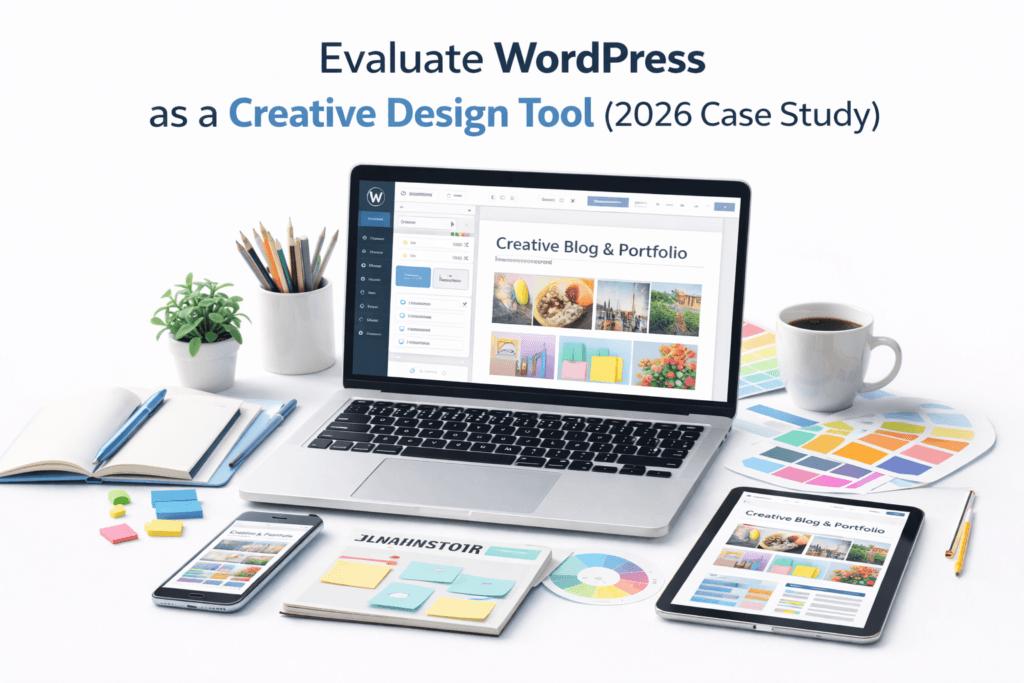
WordPress is the leading CMS in 2026, offering a powerful creative design environment through its block-based Gutenberg editor and massive theme ecosystem. It allows marketers to build mobile-responsive, brand-aligned websites without coding. By integrating AI-driven design plugins, WordPress helps teams launch high-quality digital experiences approx 30-50% faster than traditional web development.
1. Visual Editing with Gutenberg
WordPress uses a modern block-based editor known as Gutenberg. This system allows users to visually arrange elements such as:
- Buttons
- Images
- Videos
- Columns
- Call-to-action sections
The drag-and-drop experience makes layout building intuitive, even for beginners. At the same time, advanced users can customize blocks using CSS or additional plugins.
Strength:
Enables flexible design creation without requiring deep technical knowledge.
2. Theme Ecosystem for Brand Control
One of WordPress’s biggest creative advantages is its massive theme ecosystem. Thousands of free and premium themes allow businesses to quickly establish a professional design foundation.
Users can customize:
- Typography
- Colors
- Headers and footers
- Layout structures
- Navigation styles
Whether building a minimalist portfolio, a content-heavy magazine site, or an e-commerce storefront, themes provide a scalable starting point.
Strength:
Accelerates brand-aligned design while maintaining flexibility.
3. Design Plugins (Elementor & Beyond)
For advanced visual control, plugins such as Elementor and Slider Revolution expand WordPress into a full-featured design environment.
These tools allow users to:
- Create animation effects
- Add interactive sliders
- Build complex landing pages
- Implement 3D or motion-based visuals
All without writing code.
Strength:
Transforms WordPress into a customizable visual design studio suitable for marketers and agencies.
4. AI-Driven Design (2026 Update)
A major 2026 trend is the integration of generative AI tools directly inside the WordPress dashboard via plugins.
Marketers can now:
- Generate images from text prompts
- Receive automated layout suggestions
- Optimize image sizes for faster loading
- Create AI-assisted content drafts
These AI enhancements speed up creative workflows and reduce repetitive manual tasks.
Strength:
Improves design efficiency while maintaining creative control.
5. Who Should Choose WordPress?
WordPress is especially suitable for:
Content Creators
Blogs and online magazines requiring strong typography and structured layouts.
Small Businesses
Companies that need custom branding without investing in full custom development.
Portfolio Owners
Designers and photographers who want complete visual control over presentation.
MarTech Users
Teams needing easy integration with CRM systems, analytics platforms, email marketing tools, and automation software.
6. Considerations Before Choosing WordPress
While highly flexible, WordPress may require:
- Proper plugin management
- Performance optimization
- Basic understanding of hosting and maintenance
Advanced customization can sometimes demand technical adjustments, especially for high-traffic or complex websites.
MarTech Tools Course Overview, Eligibility, Fees, Duration, Syllabus and Salary 2026
MarTech Tools courses in 2026 are designed to train students and professionals in marketing automation, CRM systems, data analytics and AI driven campaign management. The field combines marketing strategy with technology platforms to help businesses scale customer acquisition and retention efficiently.
Course Overview
A MarTech Tools course focuses on practical learning rather than theory. Students learn how different marketing technologies connect inside a complete MarTech stack. The course typically includes hands on training with CRM platforms, automation tools, analytics dashboards and integration systems.
The main objective is to make learners job ready for roles that require both marketing knowledge and technical execution skills.
Eligibility Criteria
There is no strict eligibility requirement for joining a MarTech Tools course, but the following backgrounds are commonly preferred:
Graduates
Students with degrees such as BBA, BCA, B.Com, B.Tech or Marketing related programs can easily transition into MarTech roles.
Working Professionals
Digital marketers, sales executives, CRM users and performance marketers who want to move into automation and technical marketing roles.
Skill Based Entry
Anyone with basic marketing understanding, logical thinking and interest in software tools can start learning MarTech through certification programs.
Coding knowledge is not mandatory, but basic familiarity with digital tools is helpful.
Course Duration
The duration of a MarTech Tools course depends on the program level:
Certificate Programs
Usually 3 to 6 months with practical assignments.
Advanced Diploma Programs
Typically 6 to 12 months including live projects and internships.
Short term bootcamps may also be available for working professionals.
Course Fees
Fees vary depending on the institute, depth of syllabus and certification level.
Online certification programs
Approximately moderate fee range depending on platform and mentorship support.
Advanced classroom or hybrid programs
Higher fee range due to practical training, tool access and project work.
It is important to choose programs that provide hands on exposure to real tools rather than only theory.
Syllabus Structure 2026 Updated
A standard MarTech Tools syllabus includes:
Introduction to MarTech Stack
Understanding how CRM, automation, analytics and advertising platforms connect.
CRM and Lead Management
Hands on practice with platforms such as HubSpot and Salesforce. Learning pipeline management, segmentation and lifecycle tracking.
Marketing Automation
Building email workflows, SMS campaigns and customer journey automation.
Data Analytics and Reporting
Working with tools like Google Analytics 4 to understand traffic, conversions and campaign ROI.
AI in Marketing
Using generative AI and predictive analytics for personalization and campaign optimization.
API and Tool Integrations
Learning basic integrations using automation platforms like Zapier to connect different marketing systems.
Career Opportunities and Salary 2026
After completing a MarTech Tools course, candidates can apply for roles such as:
- Marketing Automation Specialist
- CRM Executive or CRM Manager
- Growth Operations Analyst
- Marketing Data Analyst
- Performance Marketing Technologist
MarTech Tools Career and Salary Outlook in 2026: Jobs, Growth & Pay Scale
After completing a MarTech Tools course, candidates are eligible for high-growth roles. Salary typically depends on your expertise with specific tools like Salesforce or HubSpot.
| Job Role | Experience | Approx Salary (Annual) |
| Marketing Automation Associate | Fresher | ₹4 LPA – ₹6.5 LPA |
| CRM Specialist | 1-3 Years | ₹7 LPA – ₹11 LPA |
| Marketing Data Analyst | 2-4 Years | ₹8 LPA – ₹14 LPA |
| MarTech Manager | 5+ Years | ₹18 LPA – ₹30+ LPA |
Disclaimer
The information provided in this article is for general educational purposes only. Course eligibility, fees, duration, syllabus, and salary details may vary by institute, location, and individual skill level. Readers should verify details directly with official course providers before making any enrollment or financial decisions. This content does not constitute professional, financial, or career advice. Any action taken based on this information is at your own discretion.